
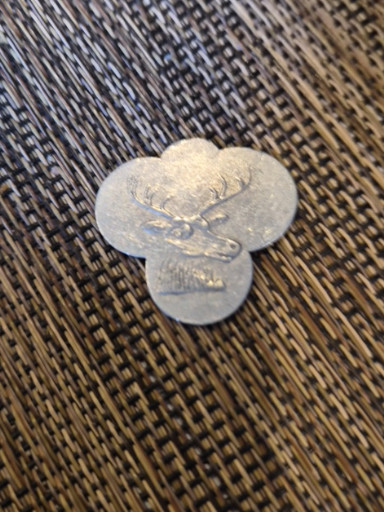
Aluminum fraternal token featuring an elk or moose emblem, likely from the Benevolent and Protective Order of Elks (B.P.O.E.)
History
Fraternal organization tokens were widely produced in the United States from the late 19th through mid-20th centuries as membership badges, trade tokens, or commemorative pieces. The B.P.O.E. (Elks) and Loyal Order of Moose were among the most prominent fraternal societies, using such tokens for lodge identification, charitable events, or as good-luck charms among members. These tokens were typically made of inexpensive metals like aluminum or brass and distributed at local lodge meetings or special gatherings. Fraternal tokens appeal to collectors of Americana, exonumia (non-currency coinage), and fraternal memorabilia. They hold historical significance as artifacts of American social history, reflecting the widespread popularity of fraternal organizations in building community and charitable networks. Collectors value these items for their connection to local history and the craftsmanship of early 20th-century token manufacturing.
Origin
United States
Time period
circa 1900-1950