
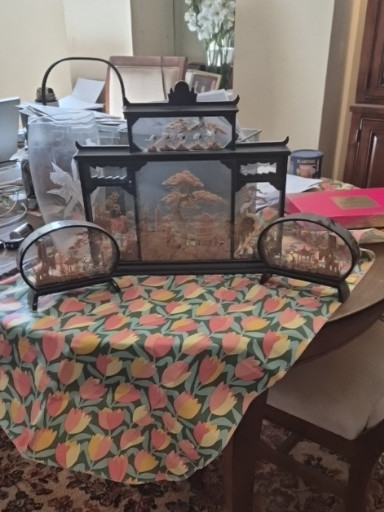
Chinese cork carving diorama in black lacquered wooden frame with glass panels
History
Chinese cork carving dioramas emerged in the late 19th and early 20th centuries as a distinctive folk art form, primarily produced in the Guangdong province. Artisans meticulously carved intricate miniature landscapes, buildings, trees, and figures from cork bark, creating three-dimensional scenes that depicted rural Chinese life, temples, bridges, and natural settings. These delicate works were typically housed in protective glass and wooden frames, often with black lacquer finish, and were popular export items to Western markets during the early to mid-20th century. Cork carving dioramas are highly valued by collectors of Asian folk art, decorative arts enthusiasts, and those interested in traditional Chinese craftsmanship. These pieces appeal to collectors for their intricate detail, cultural authenticity, and nostalgic charm as examples of a nearly lost art form. The combination of natural materials, skilled handwork, and the romantic portrayal of traditional Chinese landscapes makes them sought-after decorative objects that bridge Eastern and Western aesthetic traditions.
Origin
Guangdong Province, China
Time period
Mid 20th century