
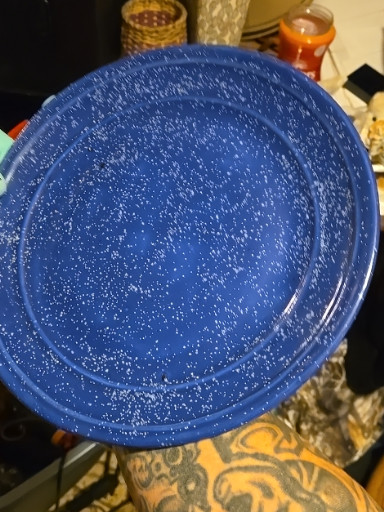
Blue speckled enamelware plate

History
Enamelware, also known as graniteware, became widely popular in the late 19th and early 20th centuries as a durable, hygienic alternative to traditional cookware and dinnerware. The speckled blue pattern, achieved by fusing porcelain enamel to metal, was particularly favored for camping and outdoor use due to its resistance to chipping and rust. These plates were manufactured by various companies across North America and Europe, becoming a staple in both household kitchens and outdoor adventures. Blue speckled enamelware plates appeal to collectors of vintage kitchenware, camping enthusiasts, and those who appreciate rustic Americana aesthetics. The nostalgic design evokes memories of campfires and simpler times, making these pieces popular for both practical use and decorative display. Collectors value them for their durability, timeless design, and connection to outdoor heritage, while interior designers often incorporate them into farmhouse and cottage-style decor.