
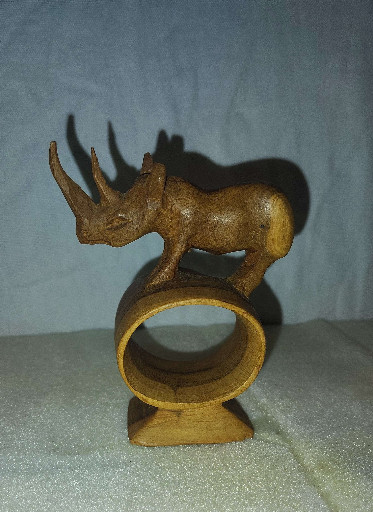
Hand-carved wooden napkin ring featuring a rhinoceros, made in Kenya

History
Hand-carved wooden napkin rings featuring African safari animals became popular souvenirs and decorative items from the mid-20th century onward, particularly from Kenya and other East African countries. These pieces were crafted by local artisans using indigenous hardwoods, often rosewood or similar dense woods, and were sold to tourists visiting African game reserves and safari destinations. The tradition of carving wildlife figures reflects the rich artistic heritage of East African woodworking and the global fascination with African wildlife during the safari tourism boom of the 1960s through 1980s. These napkin rings appeal to collectors of African folk art, safari memorabilia, and vintage tableware enthusiasts who appreciate handcrafted functional art. The pieces are valued for their charming folk art quality, cultural authenticity, and nostalgic connection to mid-century travel and dining aesthetics. Collectors of Africana, wildlife-themed decor, and those interested in ethnographic art find these items particularly appealing as they represent both practical tableware and sculptural art that captures the spirit of African wildlife in a whimsical, accessible form.
Origin
Kenya
Maker
Kenyan artisan
Time period
Mid 20th century