
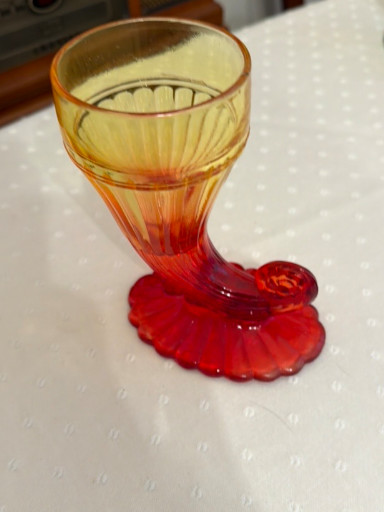
Amberina glass cornucopia vase with yellow-to-red ombre gradient

History
Amberina glass, characterized by its distinctive yellow-to-red gradient coloring, was first developed in the late 19th century and experienced a revival in mid-20th century American glassmaking. This cornucopia or horn-of-plenty shape became particularly popular during the 1940s-1960s as decorative tableware and small vases, often produced by companies like Jeannette Glass Company. These pieces were created using a heat-sensitive glass formula that transitions from amber to ruby red when reheated at the rim. Amberina glass cornucopia vases appeal to vintage glassware collectors, mid-century modern enthusiasts, and Depression-era glass specialists who appreciate the technical skill required to achieve the gradient effect. The horn-of-plenty shape and warm autumn colors make these pieces especially popular with seasonal decorators and collectors of Americana glassware. Such pieces are valued for their nostalgic charm, decorative versatility, and the craftsmanship of American pressed glass manufacturing.
Origin
United States
Maker
Likely Jeannette Glass Company
Time period
Mid 20th century (circa 1940s-1960s)