
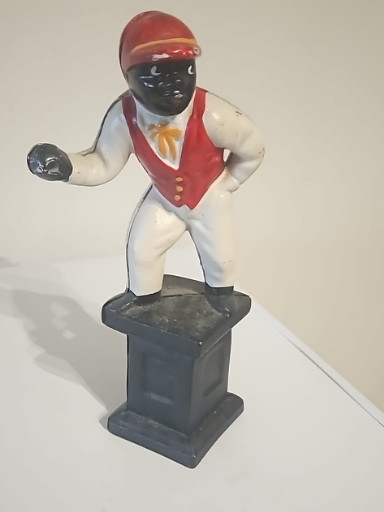
Cast iron lawn jockey or doorstop, circa 1900

History
Cast iron lawn jockeys emerged in the United States during the 19th century and became popular decorative garden ornaments through the early 20th century. These figures were originally used as hitching posts for horses and later evolved into purely decorative lawn ornaments. The tradition is often linked to the story of Jocko Graves, a young African American boy who served with George Washington, though the historical accuracy of this tale is debated. These pieces were mass-produced by various American foundries from the 1870s through the 1930s. These lawn jockeys are highly sought after by collectors of Americana, folk art, and antique garden ornaments. They appeal to historians and collectors interested in American decorative arts and material culture of the late 19th and early 20th centuries. Original examples with intact paint and good condition command premium prices among collectors of cast iron artifacts and those specializing in garden antiques. The pieces are valued for their craftsmanship, historical significance, and representation of American decorative traditions.
Origin
United States
Time period
circa 1900-1920