
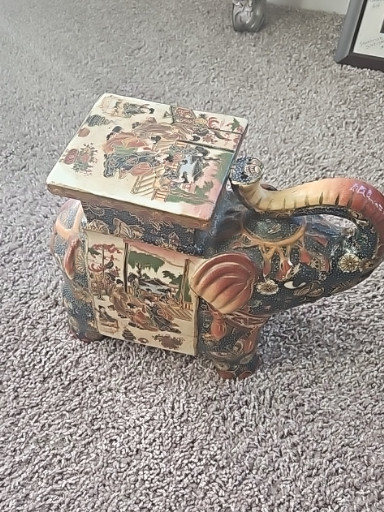
Ceramic Satsuma-style elephant plant stand or garden stool

History
Satsuma-style ceramic elephant stands originated in Japan during the Meiji period (1868–1912), though many examples were produced throughout the 20th century for export to Western markets. These decorative pieces combine functional design with ornate hand-painted imagery depicting traditional Japanese scenes, landscapes, and figures. The elephant form symbolizes strength, wisdom, and good fortune in Asian cultures, making these pieces popular as both garden stools and plant stands. These elephant stands are highly sought after by collectors of Asian ceramics, Japanese decorative arts, and vintage garden furniture enthusiasts. Their appeal lies in the intricate hand-painted details, the whimsical elephant form, and their versatility as both functional seating and decorative display pieces. Interior designers and antique collectors particularly value them for adding exotic charm and cultural depth to eclectic or Asian-inspired interiors.
Origin
Japan
Maker
Satsuma-style pottery workshop
Time period
Mid to Late 20th century