
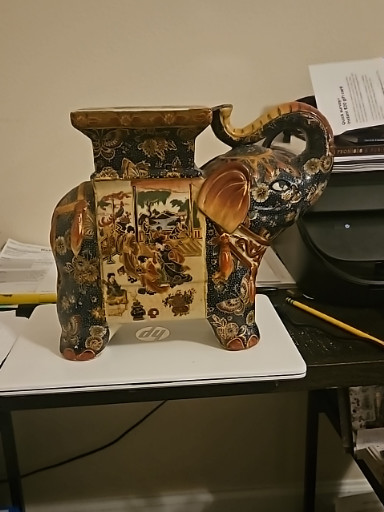
Porcelain elephant plant stand or garden seat in Satsuma style with hand-painted polychrome decoration

History
This decorative elephant figurine represents a traditional Japanese garden seat or plant stand, a form that became popular during the Meiji period (1868-1912) and continued through the mid-20th century. Satsuma-style pottery, characterized by its cream-colored crackle glaze and elaborate hand-painted designs featuring figures, landscapes, and floral motifs, was highly prized by Western collectors during the late 19th and early 20th centuries. These elephant forms were particularly popular as they symbolized good fortune, strength, and wisdom in Asian culture, with the upturned trunk specifically representing luck and prosperity. Such pieces were produced both for domestic Japanese use and for export to Western markets, where they served as exotic decorative objects that reflected the period's fascination with Asian art and design. Satsuma-style elephant plant stands appeal to collectors of Asian ceramics, decorative arts enthusiasts, and those interested in Japonisme and cross-cultural artistic exchange. These pieces are valued for their intricate hand-painted decoration, cultural symbolism, and versatility as both functional furniture and sculptural art. The combination of Eastern craftsmanship with Western decorative sensibilities makes these objects particularly interesting to collectors who appreciate the global trade networks and aesthetic movements of the late 19th and early 20th centuries.
Origin
Japan
Time period
Mid 20th century