
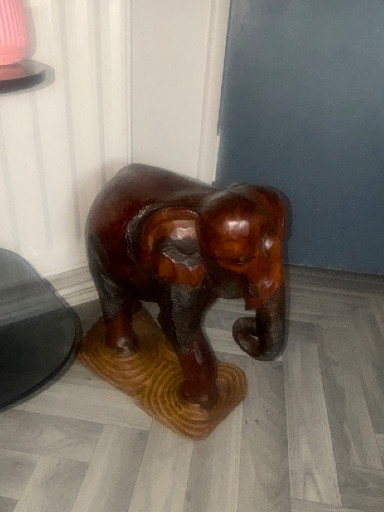
Hand-carved wooden elephant sculpture
Selling Price
£130
History
Hand-carved wooden elephant sculptures have been a significant part of Asian decorative arts, particularly from regions like Thailand, India, and Sri Lanka, dating back centuries. These pieces often represent strength, wisdom, and good fortune in various cultural traditions. The craftsmanship involves skilled artisans who shape solid wood into detailed animal forms, often using tropical hardwoods like teak or rosewood. Such sculptures became popular decorative items in Western homes during the mid-20th century as interest in Asian art and culture grew. Wooden elephant sculptures appeal to collectors of folk art, Asian decorative objects, and wildlife enthusiasts who appreciate handcrafted items with cultural significance. These pieces are valued for their artistic merit, the skill required to create them, and their symbolic meaning across different cultures. They serve as conversation pieces and add an exotic, natural element to home décor, making them particularly sought after by interior designers and collectors of ethnographic art.
Origin
Southeast Asia
Time period
Mid to Late 20th century