
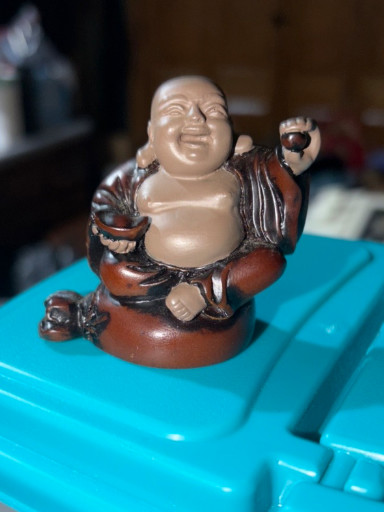
Carved wooden figurine of Budai (Laughing Buddha) seated on a sack
Selling Price
$75
History
Budai, known as the Laughing Buddha or Happy Buddha, is a beloved figure in Chinese folklore and Buddhism, traditionally depicted as a rotund, smiling monk carrying a cloth sack. Representations of Budai became popular decorative items throughout East Asia from the Ming Dynasty onward, symbolizing contentment, abundance, and good fortune. Such figurines were commonly carved from wood, ivory, or jade and displayed in homes and temples as symbols of prosperity and happiness. Carved wooden Budai figurines appeal to collectors of Asian art, Buddhist artifacts, and folk art enthusiasts who appreciate their cultural symbolism and craftsmanship. These pieces are valued for their historical significance as representations of Eastern philosophy and their enduring popularity as decorative objects that bring positive energy to living spaces. Collectors particularly seek well-carved examples with expressive faces and fine detail work.
Origin
East Asia (likely China or Japan)
Time period
Mid to Late 20th century