
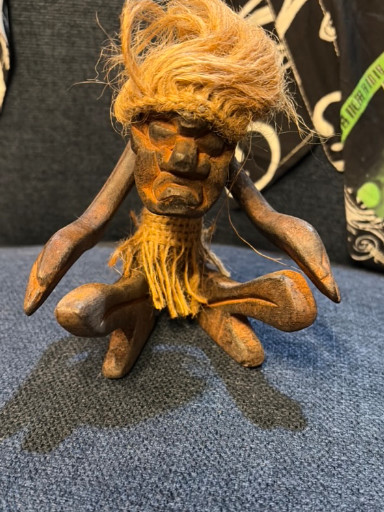
Hand-carved wooden tiki figure with natural fiber hair and skirt
Selling Price
$50
History
Tiki figures originated in Polynesian cultures, representing deities, ancestors, or spiritual guardians. These carvings were traditionally made from wood and held significant cultural and religious importance across Pacific Island societies. During the mid-20th century, tiki culture experienced a massive revival in Western countries, particularly in the United States, spawning a decorative arts movement that produced countless carved figures for home décor, bars, and restaurants. These pieces appeal to collectors of Polynesian art, mid-century modern enthusiasts, and tiki culture aficionados who appreciate the craftsmanship and nostalgic connection to the tiki bar era of the 1950s-1970s. Such figures are valued for their folk art qualities, decorative appeal, and connection to both authentic Polynesian traditions and American pop culture history.
Origin
Likely Pacific Islands or manufactured for Western tiki market
Time period
Mid to Late 20th century