
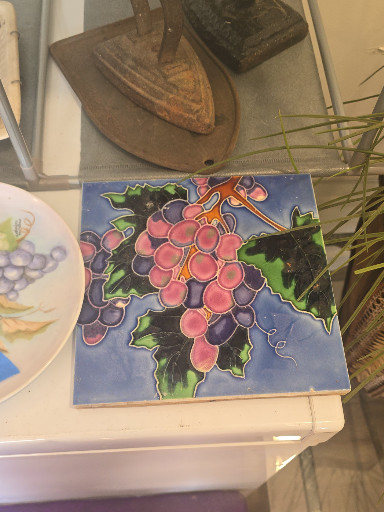
Ceramic decorative tile with hand-painted grape cluster design

History
Decorative ceramic tiles featuring fruit motifs, particularly grapes, became popular in the late 19th and early 20th centuries during the Arts and Crafts and Art Nouveau movements. These tiles were used as kitchen backsplashes, trivets, or wall decorations, celebrating natural forms and vibrant colors. The grape motif symbolized abundance and hospitality, making it a favored design for domestic spaces. This type of tile appeals to collectors of vintage kitchen décor, Arts and Crafts enthusiasts, and those interested in decorative ceramics. The hand-painted quality and cheerful design make it attractive to interior decorators seeking authentic period pieces or charming accents for rustic or farmhouse-style homes. Such tiles are valued for their craftsmanship and nostalgic appeal in the decorative arts market.
Time period
Late 20th century