
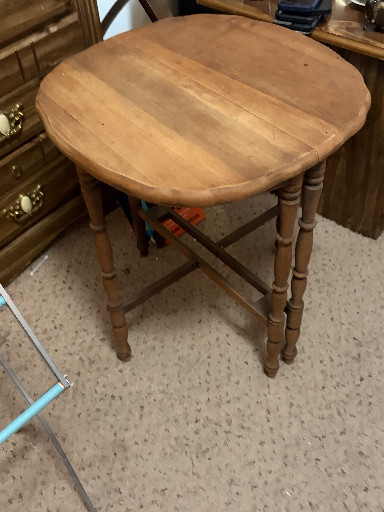
Oak drop-leaf gateleg table with turned legs
History
Drop-leaf gateleg tables became popular in England during the 17th century and remained a staple of furniture design through the 20th century. These space-saving tables feature hinged leaves that fold down when not in use and swing-out gate legs that support the extended leaves. The turned legs and stretchers are characteristic of traditional English and American furniture making, with this style experiencing revivals in both the Victorian era and the early-to-mid 20th century. Such tables were practical for smaller homes and dining spaces, allowing flexibility in room arrangement. Gateleg tables appeal to collectors of traditional and colonial-style furniture, as well as those seeking functional antique pieces for everyday use. Interior designers and homeowners value these tables for their versatility and classic aesthetic that complements both period and eclectic decor. The craftsmanship of turned legs and the warm patina of aged oak make these pieces desirable for those who appreciate historical furniture with practical utility.
Origin
England or United States
Time period
Early to Mid 20th century