
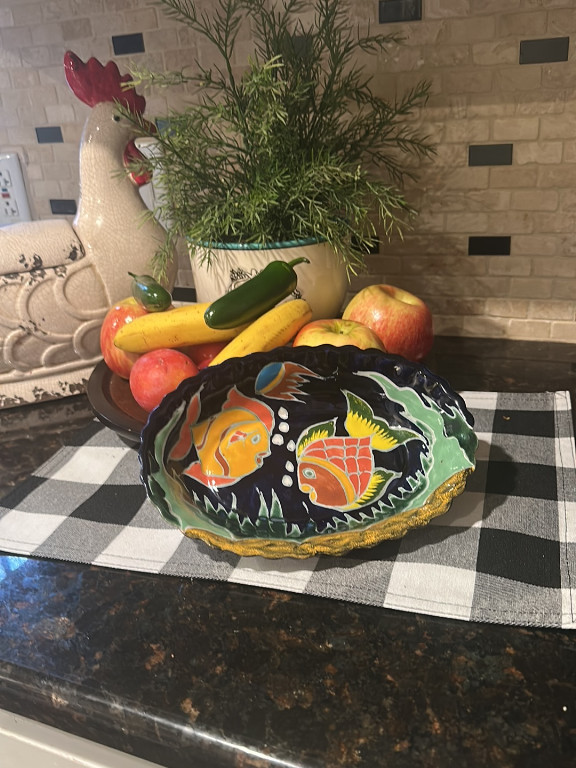
Hand-painted ceramic bowl with fish motif, Mexican folk art
Selling Price
$75
History
This type of decorative ceramic bowl originates from Mexico's rich folk art tradition, particularly from regions like Tonalá and Tlaquepaque in Jalisco, where artisans have been creating vibrant hand-painted pottery for centuries. The bold fish and marine life designs painted on a black background with bright colors reflect traditional Mexican decorative styles that became popular in the mid-to-late 20th century as tourist and export items. These bowls were typically crafted using traditional techniques passed down through generations, with each piece hand-painted making it unique. The scalloped or ruffled edge and footed base are characteristic features of this style of Mexican pottery. Such pieces appeal to collectors of Mexican folk art, Latin American decorative arts enthusiasts, and those who appreciate handcrafted artisan pottery. The vibrant colors, whimsical designs, and cultural authenticity make these bowls highly valued as both functional serving pieces and decorative objects that bring warmth and character to home interiors. Collectors particularly appreciate the hand-painted nature of each piece, which represents authentic Mexican craftsmanship and cultural heritage.
Origin
Jalisco, Mexico
Maker
Mexican artisan pottery
Time period
Mid to late 20th century