
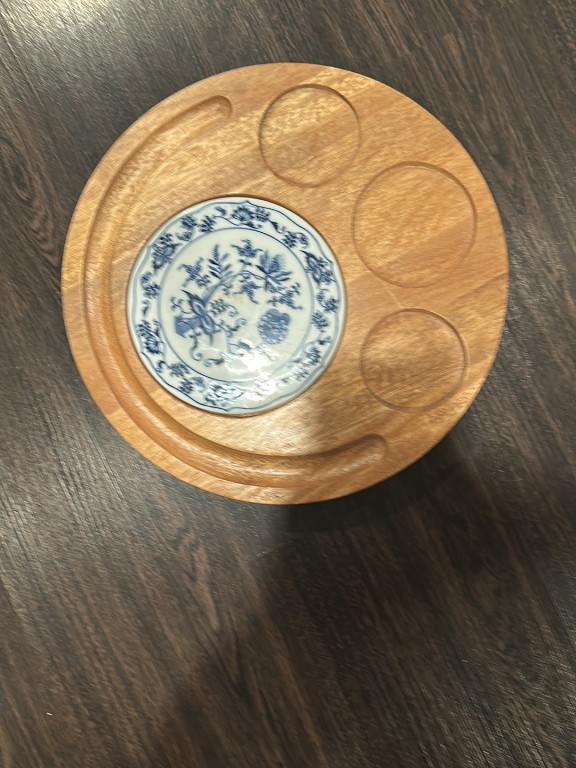
Teak wood cheese serving board with inset Blue Danube 'Blue Onion' porcelain dish
History
This serving board combines mid-century Scandinavian design with traditional Blue Onion porcelain. The Blue Onion pattern, originally created by Meissen in the 18th century, was widely reproduced by manufacturers including Blue Danube of Japan in the mid-20th century. These hybrid serving pieces became popular in the 1960s-1970s as part of the Danish modern and teak furniture movement that swept through American and European homes. The combination of warm teak wood with classic blue-and-white porcelain created an appealing contrast that fit perfectly with mid-century entertaining aesthetics. These cheese boards and serving trays are sought after by collectors of mid-century modern kitchenware, vintage entertaining pieces, and Blue Onion pattern enthusiasts. The practical design and timeless aesthetic make them desirable for both display and functional use, appealing to those who appreciate the craftsmanship and design sensibility of the era.
Origin
Japan (porcelain), likely Denmark or Asia (teak board)
Maker
Blue Danube (porcelain insert)
Time period
circa 1960-1980