
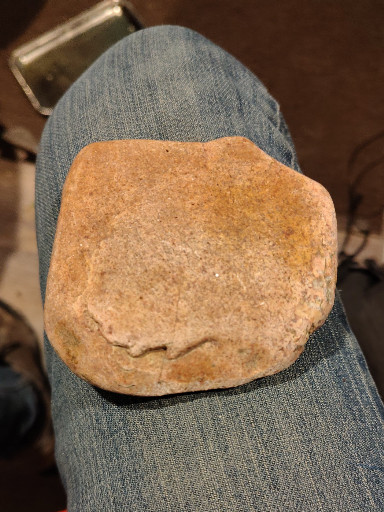
Sandstone specimen, possibly Navajo Sandstone formation
Selling Price
$75
History
This appears to be a natural sandstone specimen, likely from the Navajo Sandstone formation which dates to the Early Jurassic period (approximately 180-190 million years ago). The Navajo Sandstone is a fine-grained, aeolian (wind-deposited) sandstone formation found primarily in the southwestern United States, known for its distinctive orange-pink coloration caused by iron oxide content. This formation was created from ancient desert sand dunes and is one of the most extensive aeolian sandstone formations in the world. Geological specimens like this appeal to rock and mineral collectors, geology students, educators, and natural history enthusiasts who appreciate the Earth's geological processes and formations. The Navajo Sandstone is particularly valued for its historical significance in understanding ancient desert environments and climate patterns, making it an educational piece for those interested in paleoclimatology and sedimentary geology. Such specimens are commonly used as teaching tools in educational settings and as display pieces in natural history collections.
Origin
Southwestern United States
Time period
Early Jurassic period (circa 180-190 million years ago)