
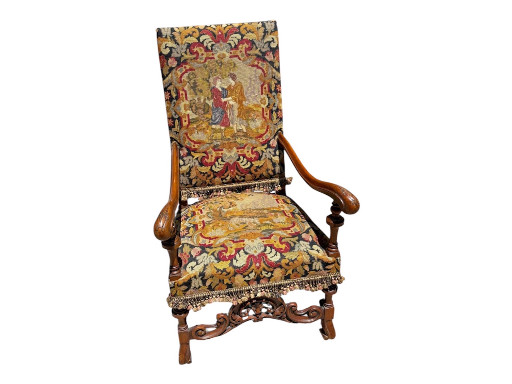
Carved walnut throne chair with needlepoint upholstery depicting biblical scenes

History
This type of high-backed throne chair emerged during the 17th century Baroque period, particularly popular in Italy, Spain, and Portugal. The elaborate carved walnut frame with scrolled arms and stretchers reflects the grandeur of European royal and ecclesiastical furniture, while the needlepoint upholstery depicting biblical or classical scenes was a hallmark of aristocratic taste. Such chairs were designed to convey power and prestige, often placed in grand halls or reception rooms. Throne chairs with needlepoint upholstery are highly prized by collectors of European antique furniture, interior designers seeking statement pieces, and enthusiasts of textile arts. The combination of skilled woodcarving and intricate needlework makes these chairs particularly appealing to those who appreciate the craftsmanship of the Baroque and Victorian revival periods. Museums and private collectors value them for their historical significance and decorative impact in period room settings.
Origin
Italy
Time period
19th century