
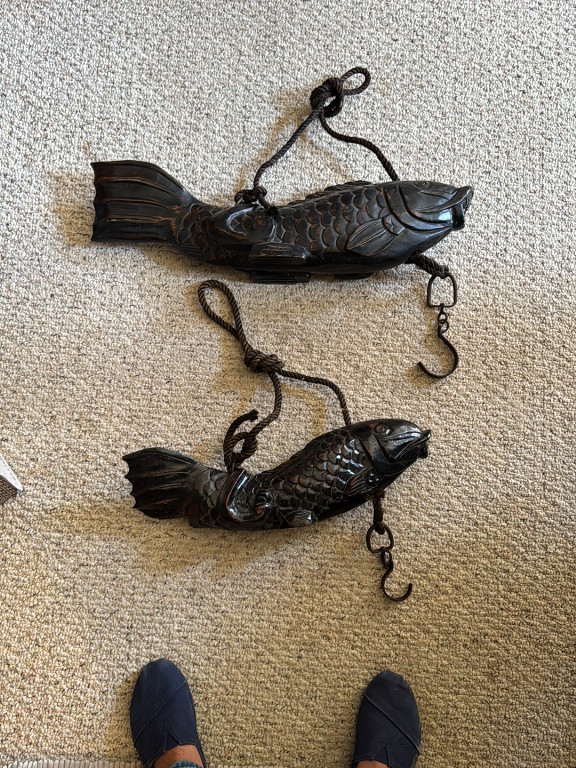
Pair of Japanese carved wood jizai kagi (adjustable pot hook) in the form of koi fish

Selling Price
$2,400
History
Jizai kagi are traditional Japanese adjustable pot hooks used in irori (sunken hearths) to suspend cooking pots over the fire. Dating from the Edo period through the early 20th century, these functional objects were often carved into decorative forms such as fish, particularly koi, which symbolize perseverance and good fortune in Japanese culture. The adjustable mechanism allowed the cook to raise or lower the pot to control cooking temperature. These carved wooden fish hooks represent a charming intersection of Japanese folk art and domestic utility. They were commonly found in traditional Japanese farmhouses and rural homes where the irori served as the central cooking and heating source. Today, jizai kagi are highly sought after by collectors of Japanese folk art, Asian antiques, and decorative arts enthusiasts who appreciate their sculptural beauty and cultural significance. These pieces appeal to those interested in traditional Japanese craftsmanship, functional art, and historical domestic implements, valued both for their aesthetic charm and their representation of traditional Japanese daily life.
Origin
Japan
Time period
Late 19th to early 20th century