
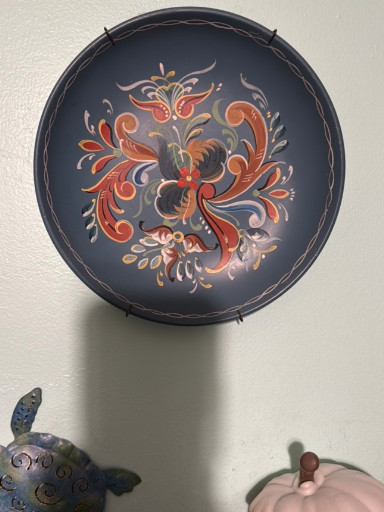
Wooden decorative plate with Norwegian Rosemaling folk art painting

History
Rosemaling is a traditional Norwegian decorative folk painting technique that flourished in rural Norway from the 1700s through the mid-1800s. The name translates to 'rose painting' and features flowing floral designs with stylized flowers, scrollwork, and acanthus leaves in vibrant colors, typically on wooden objects. This art form was revived in the 20th century and became a symbol of Norwegian cultural heritage, with pieces produced both by traditional craftspeople and as tourist items. Rosemaling pieces appeal to collectors of Scandinavian folk art, Norwegian heritage enthusiasts, and those interested in traditional decorative arts. These items are valued for their intricate hand-painted designs, cultural significance, and connection to Norwegian immigrant communities, particularly in the American Midwest. The distinctive style and craftsmanship make them popular decorative pieces that celebrate Nordic traditions and artistry.
Origin
Norway
Time period
Mid to Late 20th century