
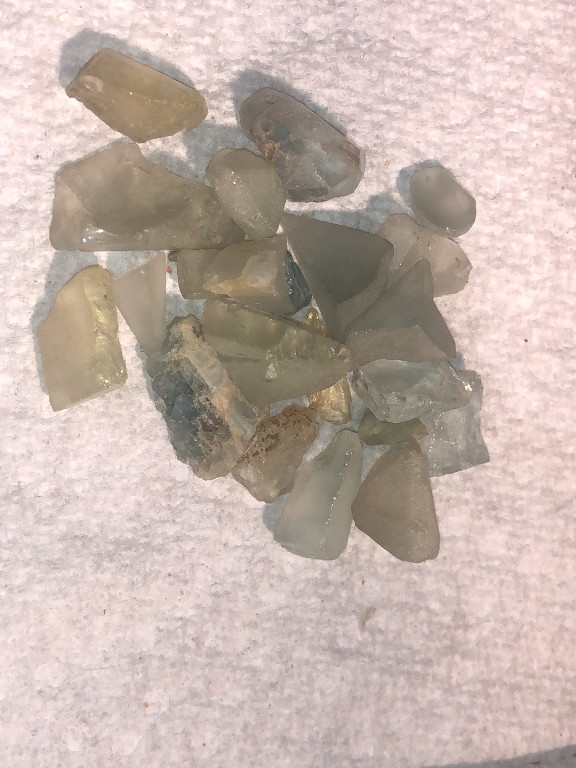
Natural Libyan Desert Glass (tektite) rough specimens, 17.84 grams

Selling Price
$100
History
Libyan Desert Glass is a natural silica glass formed approximately 29 million years ago, likely from a meteorite impact or airburst in the Sahara Desert between Libya and Egypt. This rare tektite material has been prized since ancient times, with a carved scarab of Libyan Desert Glass found in Tutankhamun's tomb, demonstrating its historical significance in ancient Egyptian culture. These translucent yellow-green specimens are among the purest natural glasses on Earth, containing over 98% silica. Libyan Desert Glass appeals strongly to mineral collectors, metaphysical practitioners, and geology enthusiasts for its extraterrestrial origin and extreme rarity. The material is found only in a limited area of the Great Sand Sea, making each specimen a unique piece of cosmic history. Collectors value these specimens for their scientific importance, natural beauty, and connection to both ancient civilizations and celestial events.
Origin
Great Sand Sea, Libyan Desert, Egypt-Libya border region
Time period
circa 29 million years ago