
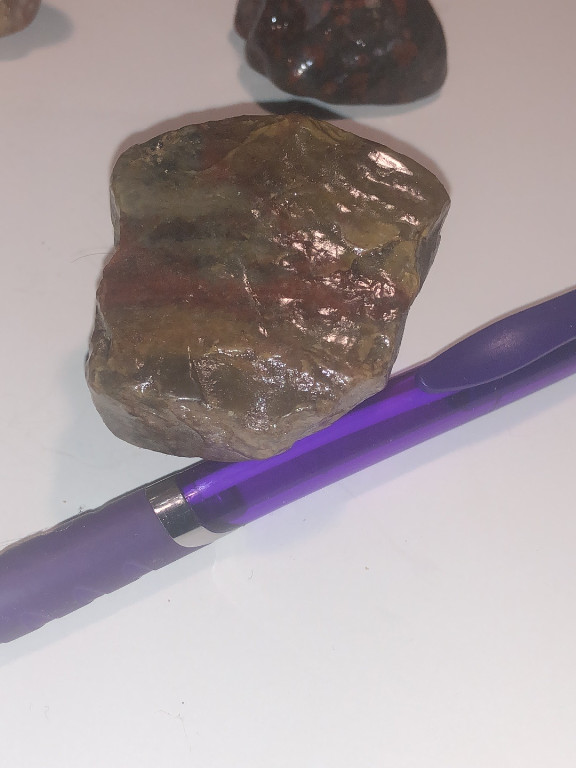
Natural rough opal specimen, possibly opalized wood or boulder opal, weighing 110 grams

Selling Price
$500
History
Opal is a hydrated amorphous form of silica that forms in sedimentary environments over millions of years, often replacing organic material like wood or filling cavities in host rock. Australia produces approximately 95% of the world's precious opal, with significant deposits in regions like Lightning Ridge, Coober Pedy, and Queensland. The formation occurs as silica-rich water percolates through rock and gradually deposits layers of opal, creating the characteristic play-of-color and iridescence. This specimen shows the natural, unpolished state that reveals its geological origins. Opal specimens are highly valued by mineral collectors, gem enthusiasts, and lapidary artists who appreciate both the geological rarity and the stunning optical phenomena these stones display. The rough, natural state makes this specimen particularly appealing to collectors who value authentic formations and to craftspeople who may cut and polish it to reveal its full beauty. Australian opals hold special significance in the gem world due to their superior quality, making specimens like this desirable for both investment and aesthetic purposes.
Origin
Australia