
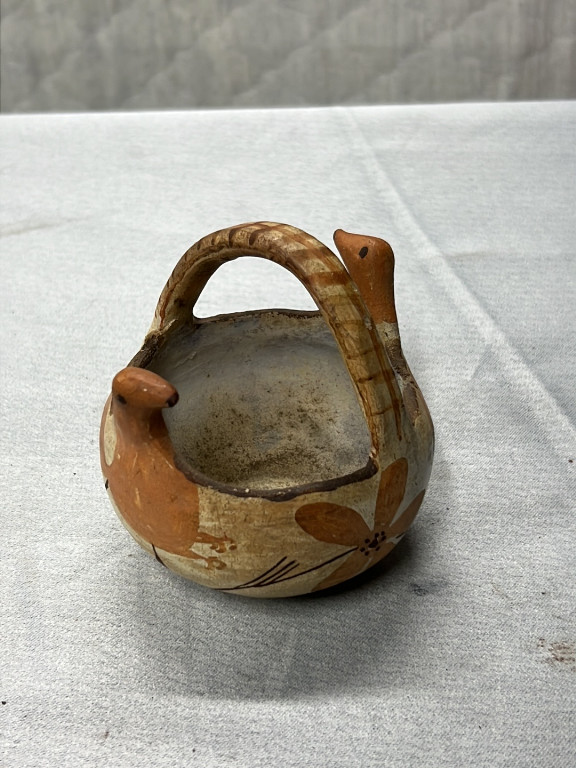
Terracotta pottery vessel with arched handle, likely Southwestern Native American or North African origin
Selling Price
$120
History
This type of pottery vessel with a distinctive arched handle and rounded body represents traditional handmade ceramic techniques used for centuries in indigenous cultures. The form suggests either Southwestern Native American pottery (possibly Acoma or Zuni Pueblo) or North African Kabyle pottery, both of which share similar utilitarian vessel designs with decorative painted elements. The piece exhibits hand-painted geometric designs in earth tones, characteristic of traditional pottery-making methods where natural clay and mineral pigments were used. Such vessels were typically used for carrying and storing water or other liquids, with the arched handle allowing for easy transport. Pottery of this style appeals to collectors of ethnographic art, Native American artifacts, and folk pottery enthusiasts who appreciate the cultural heritage and craftsmanship of traditional ceramic arts. These pieces are valued for their historical significance, artistic merit, and connection to indigenous cultural practices. Collectors particularly prize examples with intact handles and well-preserved painted decoration, as they represent important examples of functional art from specific cultural traditions.
Origin
Southwestern United States or North Africa
Time period
Early to Mid 20th century