
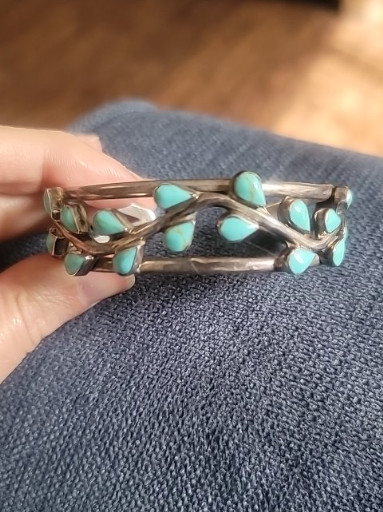
Sterling silver cuff bracelet with turquoise cabochons in floral/branch design, Southwestern Native American style

History
This style of turquoise and silver jewelry emerged from the Southwestern United States, particularly among Navajo, Zuni, and Mexican silversmiths in the early to mid-20th century. The branch or vine motif with turquoise cabochons became popular in the 1940s-1970s, blending traditional Native American silverwork with nature-inspired Art Nouveau influences. These pieces were crafted using sterling silver and natural turquoise, often featuring hand-stamped or cast designs that celebrated organic forms. Such bracelets are highly valued by collectors of Native American jewelry, Southwestern art enthusiasts, and vintage jewelry collectors for their craftsmanship, cultural significance, and the natural beauty of turquoise. The combination of sterling silver and turquoise represents a distinctive American jewelry tradition that continues to be sought after in the antique and vintage markets.
Origin
Southwestern United States or Mexico
Time period
Mid 20th century