
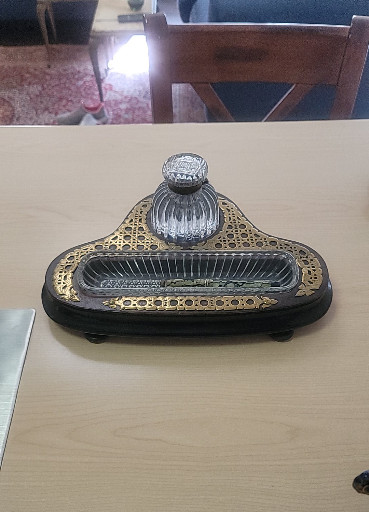
Victorian-era ebonized wood inkstand with brass Boulle-style inlay and cut glass inkwell

History
This inkstand exemplifies the Victorian fascination with ornate desk accessories that combined functionality with decorative artistry. During the 19th century, inkstands were essential writing implements found in homes, offices, and government buildings across Europe and America. The Boulle-style brass inlay technique, named after André-Charles Boulle, the celebrated French cabinetmaker to Louis XIV, remained popular throughout the Victorian period for its luxurious appearance and intricate craftsmanship. Such pieces were often made in France or England and represented the owner's refined taste and social status. Victorian inkstands are highly valued by collectors of antique writing instruments, desk accessories, and decorative arts enthusiasts who appreciate the marriage of form and function in everyday objects. These pieces appeal particularly to those furnishing period homes, collectors of Victoriana, and anyone drawn to the elegance of 19th-century craftsmanship. The combination of ebonized wood, ornate brass inlay, and cut crystal creates a striking visual statement that transcends mere utility, making it a coveted piece for display in libraries, studies, or curated collections of historical writing paraphernalia.
Origin
France or England
Time period
circa 1860-1900