
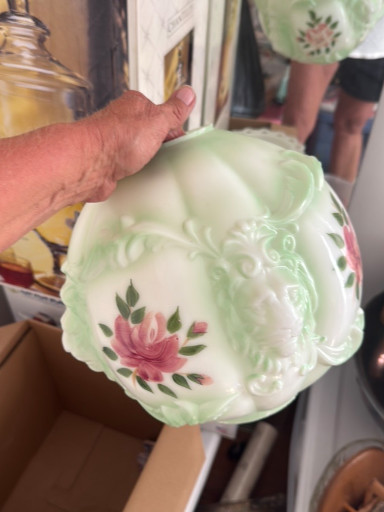
Satin glass lamp shade with hand-painted floral decoration

History
Satin glass lamp shades with hand-painted floral motifs became popular during the Victorian and Edwardian eras, particularly from the 1880s through the 1920s. These shades were often produced by American and European glass manufacturers who specialized in decorative lighting fixtures. The soft, frosted appearance of satin glass was achieved through acid etching or sandblasting, creating an elegant diffused glow when illuminated. The delicate hand-painted rose and leaf designs reflect the period's aesthetic preference for naturalistic ornamentation in domestic interiors. These decorative lamp shades appeal to collectors of Victorian and early 20th-century lighting, antique glass enthusiasts, and those who appreciate period home décor. The combination of functional lighting and artistic craftsmanship makes these pieces desirable for both display and practical use. Collectors value these shades for their delicate beauty, historical significance, and the skilled artistry required to create the painted floral designs. Such pieces are particularly sought after by those restoring period homes or creating vintage-inspired interiors.
Origin
United States or Europe
Time period
circa 1890-1920