
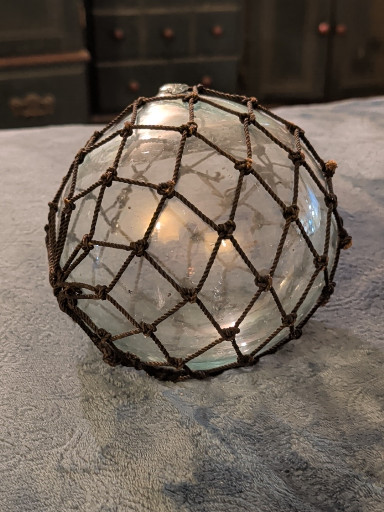
Glass fishing float with rope netting
Selling Price
$65
History
Glass fishing floats were essential tools used by fishermen from the mid-19th century through the mid-20th century to keep fishing nets buoyant. These hand-blown glass spheres, wrapped in rope or hemp netting, originated primarily in Norway and Japan, where they were mass-produced for commercial fishing operations. The floats would often break free from nets and drift across oceans, becoming prized beachcombing finds. These floats have become highly collectible among maritime enthusiasts, coastal decorators, and vintage nautical collectors. Their appeal lies in their historical connection to traditional fishing practices, their aesthetic beauty with varied glass colors and textures, and their romantic association with ocean voyages. Collectors particularly value floats with original netting, unusual colors, and identifiable maker's marks, making them popular decorative pieces in coastal homes and maritime-themed collections.
Origin
Norway or Japan
Time period
circa 1920–1970