
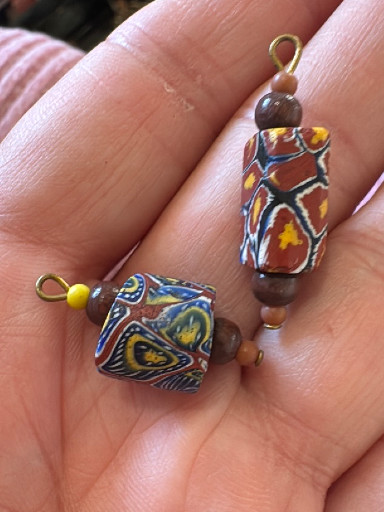
Venetian millefiori glass trade beads

Selling Price
$35
History
These beads were produced in Venice, Italy, from the late 1800s through the early 1900s and were widely traded in Africa and other regions. The millefiori technique, meaning 'thousand flowers' in Italian, involves creating intricate patterns by fusing colored glass canes and slicing them to reveal decorative cross-sections. These beads served as currency and valuable trade goods during the colonial era, exchanged for commodities like ivory, gold, and spices. Venetian trade beads are highly sought after by collectors of African art, antique jewelry enthusiasts, and historians interested in the cultural exchange between Europe and Africa. Their vibrant colors, intricate patterns, and historical significance make them prized collectibles. Each bead represents a tangible link to global trade networks and the craftsmanship of Venetian glassmakers, appealing to those who appreciate both artistry and historical artifacts.
Origin
Venice, Veneto, Italy
Maker
Venetian glassmakers
Time period
circa 1880–1920