
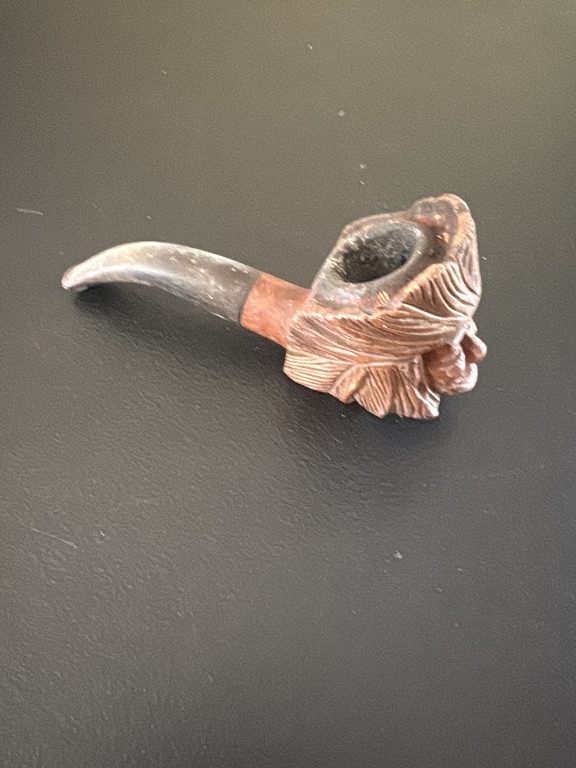
Hand-carved briar tobacco pipe with figural Native American head

History
Hand-carved figural tobacco pipes became popular collectibles in the late 19th and early 20th centuries, with briar wood emerging as the preferred material due to its heat resistance and grain patterns. Pipes featuring Native American imagery were particularly popular in North America and Europe, reflecting romanticized Western themes. These pipes were often crafted by skilled artisans who specialized in detailed figural carvings, transforming functional smoking implements into decorative art pieces. Figural pipes appeal to multiple collecting communities, including tobacco pipe enthusiasts, folk art collectors, and those interested in Western Americana. Collectors value these pieces for their craftsmanship, artistic detail, and historical significance as examples of decorative smoking accessories from an era when pipe smoking was a widespread social custom. The combination of functional design and sculptural artistry makes these pipes desirable display pieces even for non-smokers who appreciate carved wooden objects.
Time period
Mid to Late 20th century