
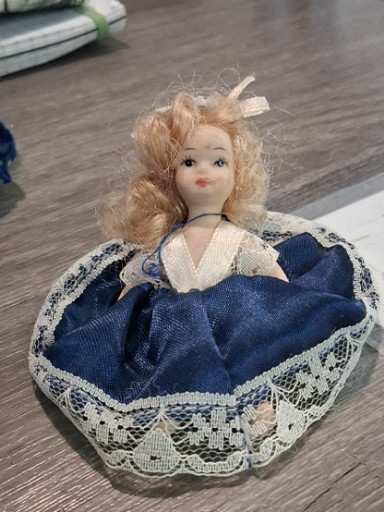
Porcelain pincushion doll with blue fabric dress and lace trim
History
Pincushion dolls, also known as half dolls or tea cozies, became popular decorative items in the late 19th and early 20th centuries. These charming figurines featured a porcelain upper body attached to a fabric skirt that concealed a pincushion base, serving both practical and ornamental purposes in Victorian and Edwardian homes. They were mass-produced in Germany, Japan, and other countries, often depicting elegant ladies in fashionable attire. These dolls appeal to collectors of vintage sewing accessories, miniature dolls, and Victorian-era decorative arts. The combination of delicate porcelain craftsmanship and textile artistry makes them desirable among enthusiasts of needlework history and nostalgic home décor. Their petite size and charming aesthetic continue to attract collectors who appreciate the blend of functionality and whimsy that characterized domestic life in the early 1900s.
Time period
Late 20th century