
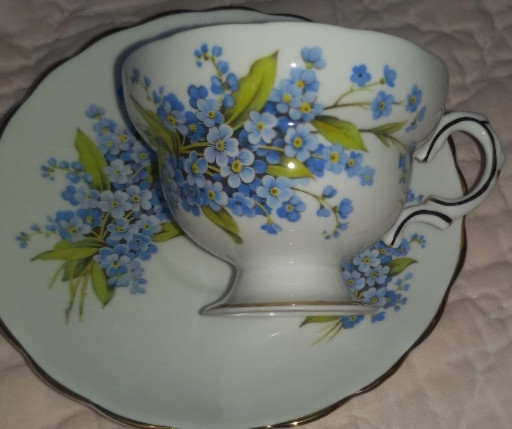
Bone china teacup and saucer with forget-me-not floral pattern

Selling Price
$45
History
This teacup and saucer represents the classic English bone china tradition that flourished throughout the 20th century. Bone china, invented in England in the late 18th century, became the preferred material for fine teaware due to its translucency, strength, and pure white color. The forget-me-not pattern was particularly popular from the 1950s through the 1970s, symbolizing remembrance and true love in Victorian flower language. These delicate floral designs were hand-applied or transfer-printed onto the china, making each piece a small work of decorative art. Forget-me-not pattern teacups are highly sought after by teacup collectors, vintage china enthusiasts, and those who appreciate mid-century English tableware. The romantic floral motif and elegant form make these pieces perfect for afternoon tea service, display in china cabinets, or as part of a mismatched vintage tea set collection. Collectors value these items for their nostalgic charm, fine craftsmanship, and the enduring appeal of traditional English tea culture. The combination of delicate artistry and functional beauty makes them treasured additions to any vintage china collection.
Origin
England
Maker
Regency Bone China
Time period
circa 1950-1970