
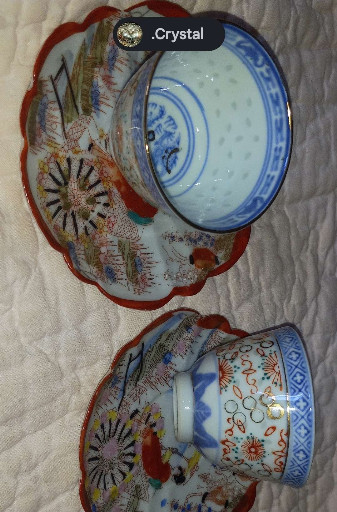
Hand-painted Japanese porcelain teacup and saucer set with Geisha and landscape motifs

Selling Price
$75
History
This style of Japanese export porcelain emerged during the Meiji period (1868-1912) and continued through the early-to-mid 20th century, when Japan produced decorative tea wares specifically for Western markets. These pieces typically feature hand-painted scenes of geishas, Mount Fuji, pagodas, and floral designs in vibrant enamels with gilt accents, reflecting a romanticized view of Japanese culture that appealed to Western collectors. Geisha ware tea sets remain highly collectible among enthusiasts of Japanese ceramics, vintage tea service collectors, and those interested in cross-cultural decorative arts. The intricate hand-painted details, scalloped edges with red and gold borders, and the charming depiction of traditional Japanese life make these pieces both historically significant and aesthetically appealing. Collectors value them for their craftsmanship, cultural representation, and nostalgic connection to early 20th-century international trade.
Origin
Japan
Time period
Early-to-mid 20th century