
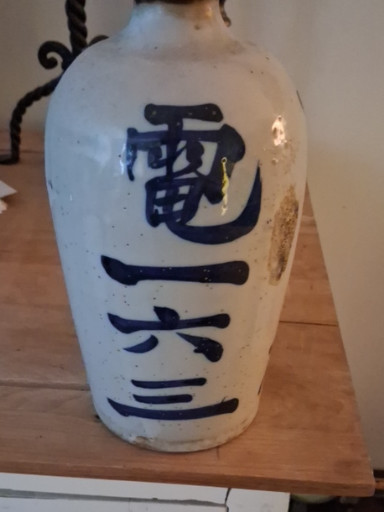
Ceramic sake bottle (tokkuri) with hand-painted kanji characters
History
This type of ceramic sake bottle, known as a tokkuri or kayoi-tokkuri, was commonly used in Japan from the late 19th through early 20th century for storing and serving sake. The hand-painted kanji characters typically indicated the sake brewery, shop name, or specific sake brand, serving both functional and advertising purposes. These bottles were often delivered to customers and returned for refilling, making them an integral part of Japan's traditional sake distribution system. Tokkuri bottles are highly valued by collectors of Japanese ceramics and sake-related antiques for their historical significance and folk art appeal. The hand-painted calligraphy and rustic glazing techniques represent traditional Japanese craftsmanship and provide a tangible connection to Japan's rich sake-brewing heritage. Collectors of Asian ceramics, Japanese folk art enthusiasts, and sake connoisseurs particularly appreciate these pieces for their authentic patina and cultural storytelling value.
Origin
Japan
Time period
Late 19th to early 20th century