
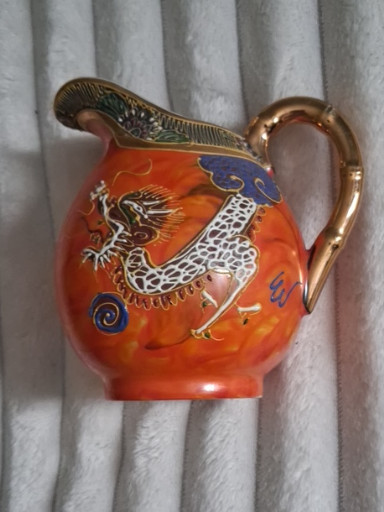
Porcelain creamer/pitcher with moriage dragon decoration, Japanese Dragonware
History
Japanese Dragonware emerged in the early 20th century as a popular export ware, characterized by its distinctive raised moriage technique where slip-trailed dragons and decorative elements create a three-dimensional effect on the porcelain surface. These pieces were mass-produced primarily for Western markets from the 1920s through the 1950s, with orange and red backgrounds being among the most common color schemes. The dragon motif symbolizes strength, wisdom, and good fortune in Asian culture, making these pieces both decorative and symbolically meaningful. Dragonware remains highly collectible among enthusiasts of vintage Japanese ceramics and mid-century Asian export porcelain. Collectors appreciate these pieces for their nostalgic appeal, intricate hand-painted details, and the skilled moriage craftsmanship that gives each dragon a tactile, sculptural quality. Complete tea and coffee sets are particularly sought after, though individual pieces like creamers are valued for their decorative charm and affordability, making them accessible entry points for new collectors of Japanese export ware.
Origin
Japan
Time period
circa 1920-1950