
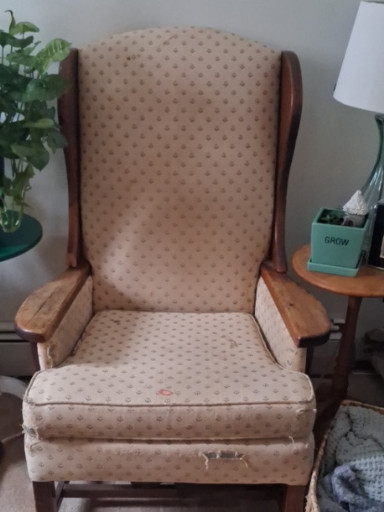
Upholstered wingback armchair with wooden frame and arms
History
Wingback chairs originated in 17th-century England, designed with high sides to protect sitters from drafts and retain heat from fireplaces. The distinctive wing-shaped sides became a hallmark of comfort and elegance, evolving through various periods including Queen Anne, Chippendale, and Colonial Revival styles. This particular style with exposed wooden arms and traditional proportions reflects mid-20th century American furniture design, when manufacturers like Stickley and Thomasville popularized comfortable, well-crafted seating for residential use. Wingback chairs remain highly sought after by interior designers, antique collectors, and homeowners who appreciate classic American furniture. These pieces appeal to those seeking timeless elegance combined with functional comfort, fitting seamlessly into traditional, transitional, and even eclectic interiors. The exposed wooden arms and substantial construction make these chairs particularly valued by enthusiasts of quality craftsmanship and period furniture who appreciate their versatility and enduring style.
Origin
United States
Time period
Mid 20th century