
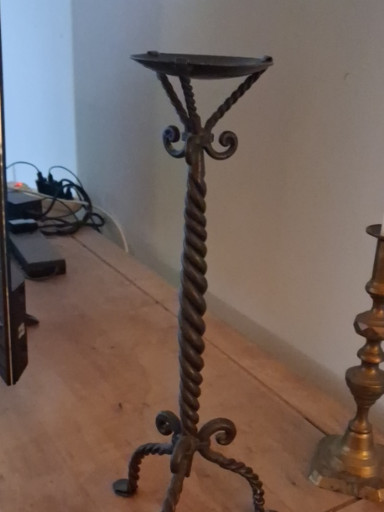
Wrought iron candle stand with twisted column and scrollwork base
History
Wrought iron candle stands with twisted columns and decorative scrollwork became popular in Europe during the 17th and 18th centuries, particularly in France and Spain. These functional yet ornamental pieces were crafted by skilled blacksmiths who employed traditional forging techniques to create the characteristic spiral-twisted stems and elaborate curled feet. The design reflects the Baroque and early Colonial periods when such stands were used in churches, manor houses, and affluent homes to elevate candles for better illumination. These candle stands appeal to collectors of antique metalwork, interior designers seeking authentic period pieces, and enthusiasts of traditional blacksmithing arts. Their timeless aesthetic combines functionality with artistic craftsmanship, making them valued both as historical artifacts and as decorative accents in traditional or eclectic interiors. The hand-forged nature and enduring design of such pieces continue to attract those who appreciate the skill and artistry of historical metalworking traditions.
Origin
Europe
Time period
19th to early 20th century