
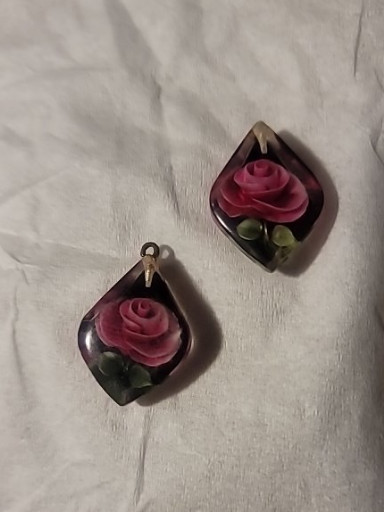
Reverse-carved lucite pendants with red rose motif

History
Reverse-carved lucite jewelry became highly popular during the 1940s and 1950s, particularly in the United States. This technique involved carving intricate designs into the back of clear lucite (acrylic resin), then painting the carved areas to create a three-dimensional effect when viewed from the front. The rose motif was especially favored during this period, symbolizing romance and femininity in post-war fashion. These pieces were often handcrafted and represented an affordable yet elegant alternative to more expensive carved gemstone jewelry. Reverse-carved lucite jewelry appeals to vintage costume jewelry collectors, mid-century modern enthusiasts, and those who appreciate the craftsmanship of 1940s-1950s fashion accessories. The rose design holds particular charm for collectors of floral-themed jewelry and romantic motifs. These pieces are valued for their nostalgic appeal, the skill required to create the reverse-carving effect, and their representation of an iconic era in American jewelry design. The translucent quality and dimensional appearance make them distinctive conversation pieces that bridge art and wearable fashion.
Origin
United States
Time period
circa 1940–1960