
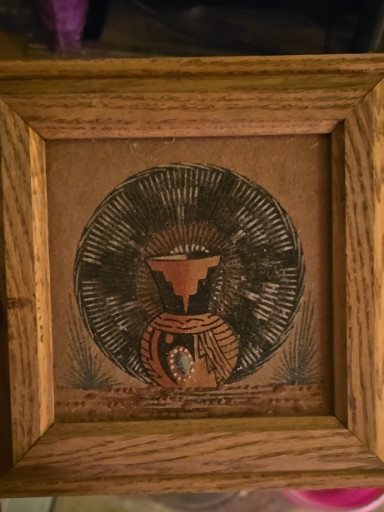
Native American sand art painting depicting a pottery vessel with traditional design in wooden frame
History
Native American sand art emerged as a popular decorative art form in the mid-to-late 20th century, particularly in the American Southwest. These pieces typically feature traditional motifs such as pottery vessels, Kokopelli figures, and geometric patterns created using naturally colored sands adhered to board or canvas. The technique draws inspiration from Navajo sand painting ceremonies but was adapted for commercial and decorative purposes. Sand art paintings like this appeal to collectors of Native American crafts, Southwest Americana enthusiasts, and those interested in folk art traditions. These pieces are valued for their handcrafted nature, connection to indigenous artistic traditions, and their role as accessible examples of Native American-inspired decorative art from the vintage era. They remain popular among collectors seeking authentic representations of Southwest culture and artistry.
Origin
Albuquerque, New Mexico, United States
Maker
Q. Largo
Time period
circa 1970–1990