
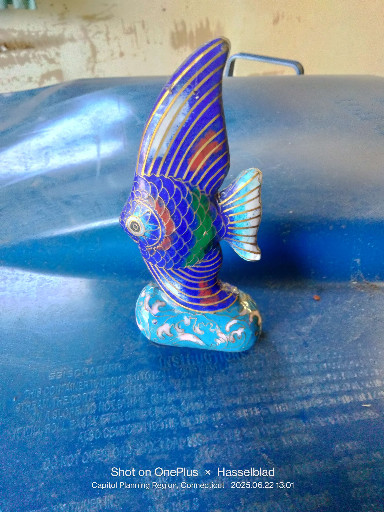
Chinese cloisonné enamel fish figurine

History
Chinese cloisonné is an ancient metalworking technique that reached its artistic peak during the Ming and Qing dynasties, though production continued throughout the 20th century. The technique involves applying colored enamel paste within wire compartments soldered onto a metal base, then firing and polishing to create vibrant, durable decorative objects. Fish motifs hold special significance in Chinese culture, symbolizing abundance, prosperity, and good fortune, making them popular subjects for decorative arts. Cloisonné fish figurines appeal to collectors of Asian decorative arts, Chinese cultural artifacts, and enamelwork enthusiasts who appreciate the intricate craftsmanship and symbolic meaning. These pieces are valued for their vibrant colors, detailed wirework, and cultural significance. Collectors of Chinese export art and those interested in traditional metalworking techniques find these figurines particularly attractive as they represent centuries of artistic tradition combined with auspicious symbolism.
Origin
China
Time period
Mid to Late 20th century