
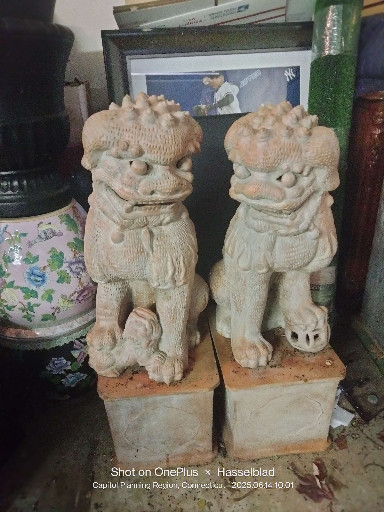
Pair of sandstone or terracotta Foo Dog (Guardian Lion) sculptures

History
Foo Dogs, also known as Guardian Lions or Shishi, originated in China during the Han Dynasty (206 BCE–220 CE) and were traditionally placed at the entrances of temples, palaces, and important buildings to ward off evil spirits and provide protection. These mythical creatures symbolize power, prosperity, and guardianship in Chinese culture, with the male typically depicted with a ball under his paw and the female with a cub. The tradition spread throughout East Asia, including Japan and Korea, where similar guardian figures became integral to architectural and decorative arts. Foo Dog sculptures remain highly sought after by collectors of Asian art and antiques, interior designers seeking statement pieces, and enthusiasts of feng shui practices. These pieces appeal to those interested in cultural symbolism, architectural salvage, and garden ornamentation. Authentic antique examples command premium prices, while vintage reproductions from the 20th century offer accessible entry points for collectors. The weathered patina and hand-carved details of quality pieces make them valuable both as decorative objects and as tangible connections to centuries of Asian artistic tradition.
Origin
China
Time period
20th century