
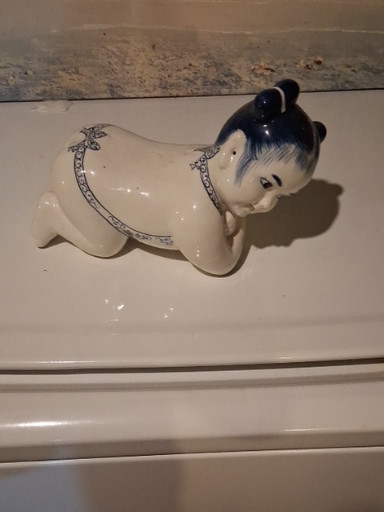
Porcelain opium pillow depicting a reclining child

Selling Price
$180
History
Chinese opium pillows, also known as headrests or neck rests, have been used since ancient times, with ceramic versions becoming particularly popular during the Song Dynasty (960-1279 AD). These pillows were designed to support the neck while sleeping, keeping elaborate hairstyles intact and providing a cool surface in warm climates. By the 20th century, decorative versions featuring children, animals, and floral motifs became popular export items and collectibles. Pieces like this one, depicting a reclining child with traditional hairstyle and decorative blue painting, typically date from the mid-20th century and were produced for the Western market. These pillows appeal to collectors of Chinese ceramics, Asian decorative arts enthusiasts, and those interested in historical sleeping implements. The charming depiction of children in traditional dress, combined with the functional yet decorative nature of the piece, makes it attractive to collectors of Chinoiserie and vintage Asian export porcelain. Such items are valued for their cultural significance, craftsmanship, and the nostalgic appeal of mid-century Asian decorative arts.
Origin
China
Time period
Mid 20th century