
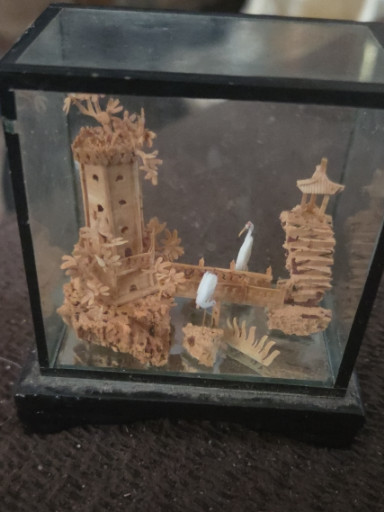
Chinese cork carving diorama in glass case depicting a pagoda landscape scene

Selling Price
$100
History
Chinese cork carving dioramas emerged as a distinctive folk art form in the mid-20th century, particularly popular from the 1940s through the 1970s. Artisans in southern China, especially in the Guangdong province, meticulously carved intricate miniature landscapes from natural cork bark, depicting traditional architectural elements like pagodas, pavilions, bridges, and trees. These delicate three-dimensional scenes were typically enclosed in protective glass cases with black lacquered wooden frames for display and preservation. These cork dioramas appeal to collectors of Asian decorative arts, mid-century home décor enthusiasts, and those interested in traditional Chinese craftsmanship. The intricate hand-carved details, nostalgic charm, and cultural significance make them sought-after pieces for display in curio cabinets or as conversation pieces. Collectors appreciate both the technical skill required to carve such delicate scenes and the historical snapshot they provide of mid-century Chinese export art during a period of significant cultural exchange between East and West.
Origin
Guangdong Province, China
Maker
San Yu or similar Chinese cork carving workshop
Time period
Mid 20th century, circa 1950-1970