
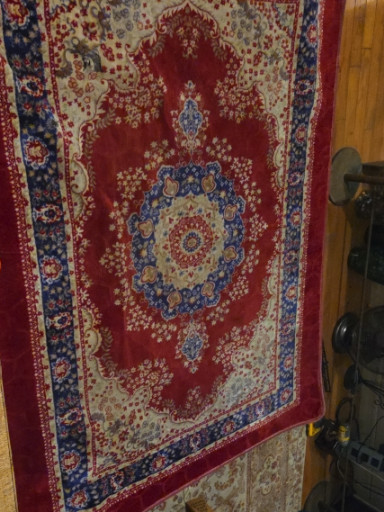
Hand-knotted wool rug with central medallion design, Persian or Turkish style

History
This type of medallion rug represents a centuries-old tradition of carpet weaving in the Middle East, particularly in Persia (modern-day Iran) and Turkey. The central medallion design, featuring intricate floral motifs and geometric borders, became popular during the Safavid period in Persia (16th-18th centuries) and was widely adopted by Turkish weavers in Anatolia. These rugs were traditionally hand-knotted using wool pile on cotton or wool foundations, with natural dyes creating the rich reds, blues, and ivory tones. Medallion rugs are highly valued by collectors, interior designers, and enthusiasts of traditional textiles for their craftsmanship, artistic beauty, and cultural significance. The intricate knotting technique, symmetrical patterns, and harmonious color palettes make these rugs desirable as both functional floor coverings and decorative art pieces. Collectors particularly appreciate examples with fine knot density, natural dyes, and well-preserved condition, as these factors contribute to both aesthetic appeal and investment value in the antique and vintage rug market.
Origin
Persia (Iran) or Anatolia, Turkey
Time period
Mid to Late 20th century