
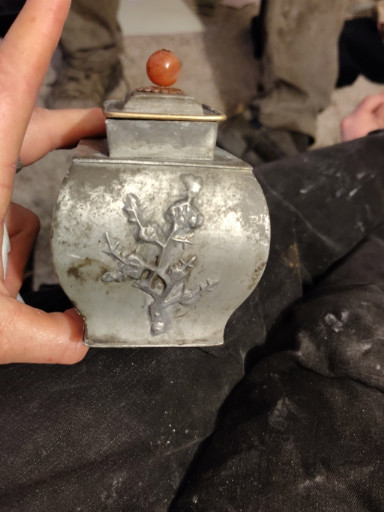
Pewter tea caddy with carnelian stopper and applied floral decoration
Selling Price
$315
History
Chinese pewter tea caddies became popular during the Qing Dynasty (1644–1912) as functional yet decorative containers for storing precious tea leaves. These vessels often featured applied relief decorations of natural motifs like plum blossoms or bamboo, and were sometimes embellished with semi-precious stone cabochons such as carnelian or jade. The combination of pewter's malleability and the addition of colorful stones created attractive pieces that served both practical and aesthetic purposes in traditional Chinese tea culture. These tea caddies appeal to collectors of Asian antiques, particularly those interested in Chinese tea culture and decorative arts. The combination of pewter craftsmanship with natural stone accents makes them desirable to collectors who appreciate the blend of functional design and artistic detail. Such pieces are valued for their historical significance in documenting traditional Chinese tea ceremonies and the skilled metalwork of the Qing period.
Origin
China
Time period
Late 19th to early 20th century