
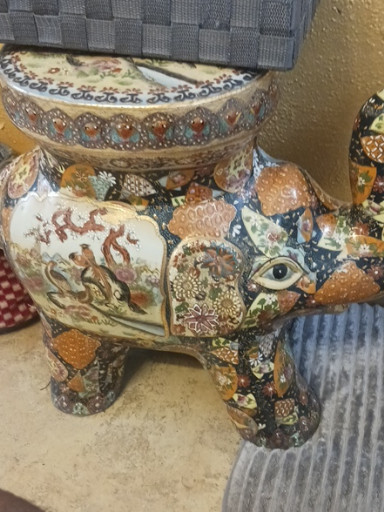
Ceramic elephant garden seat or plant stand in Japanese Satsuma style

History
Japanese Satsuma-style ceramic elephant garden seats emerged in the late 19th and early 20th centuries, inspired by traditional Japanese pottery techniques combined with Chinese decorative motifs. These ornate pieces were originally created as functional garden furniture and plant stands, featuring intricate hand-painted designs with gold accents, floral patterns, and symbolic imagery. The elephant form represents strength, wisdom, and good fortune in Asian culture, making these pieces both decorative and auspicious. These elephant garden seats appeal to collectors of Asian decorative arts, interior designers seeking statement pieces, and enthusiasts of exotic garden furniture. Their elaborate craftsmanship, cultural symbolism, and dual functionality as both seating and display platforms make them highly sought after in the antiques market. Collectors particularly value examples with fine hand-painted details, rich gilding, and good structural condition, as these pieces serve as striking focal points in both indoor and outdoor settings.
Origin
Japan
Maker
Japanese Satsuma-style workshop
Time period
Late 19th to early 20th century style