
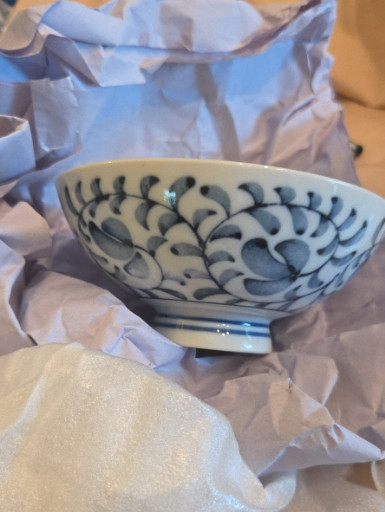
Porcelain rice bowl with blue and white arabesque (karakusa) pattern
Selling Price
$40
History
This bowl features the traditional karakusa (arabesque or scrolling vine) pattern, one of the most iconic motifs in Japanese ceramics. The design originated from Chinese porcelain traditions during the Ming dynasty and was adapted by Japanese potters in Arita during the Edo period (17th–19th centuries). The flowing, continuous vine pattern symbolizes longevity and prosperity, making it a popular decorative element on everyday tableware. Blue and white porcelain bowls with karakusa patterns remain highly collectible among enthusiasts of Japanese ceramics and Asian decorative arts. These pieces appeal to collectors of traditional Japanese tableware, tea ceremony practitioners, and those interested in historical ceramic techniques. The timeless design and cultural significance make such bowls valued both as functional items and as examples of Japanese ceramic artistry.
Origin
Japan
Time period
20th century