
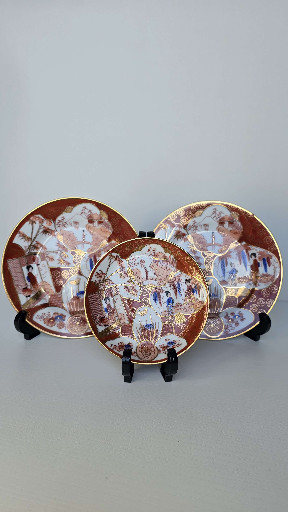
Set of three Japanese Kutani-style porcelain plates with figural decoration

Selling Price
$95
History
These plates exemplify the Japanese Kutani porcelain tradition that flourished during the Meiji period (1868-1912) and continued into the 20th century. Kutani ware is characterized by its distinctive overglaze enamel decoration featuring rich iron-red backgrounds, gold accents, and intricate figural scenes depicting geishas, courtiers, and daily life in imperial Japan. The style became particularly popular for export to Western markets during the late 19th and early 20th centuries. Kutani-style porcelain plates are highly sought after by collectors of Japanese ceramics and Asian decorative arts for their vibrant colors, detailed hand-painted scenes, and historical significance. These pieces appeal to enthusiasts of Japonisme, the 19th-century Western fascination with Japanese art and culture, as well as collectors who appreciate the technical skill required to create such elaborate enamel work. The combination of decorative appeal and cultural heritage makes these plates valued both as display pieces and as examples of Japanese ceramic artistry.
Origin
Japan
Time period
Late 19th to early 20th century