
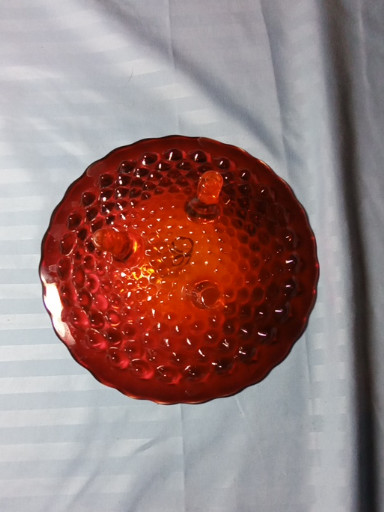
Amberina hobnail glass footed dish
Selling Price
$20
History
Amberina glass emerged in the late 19th century, characterized by its distinctive gradient coloring from amber to ruby red, achieved through heat-reactive gold compounds in the glass formula. The hobnail pattern, featuring raised bumps across the surface, became particularly popular in American glassware during the mid-20th century, with companies like Fenton Glass Company producing numerous pieces in this style from the 1940s through the 1980s. These decorative dishes were commonly used as candy dishes, serving bowls, or display pieces in American homes. Amberina hobnail glass pieces remain highly collectible among vintage glassware enthusiasts and mid-century modern décor collectors. The vibrant color gradient and tactile hobnail texture make these pieces visually striking display items that catch light beautifully. Collectors of American art glass, particularly those focused on Fenton or similar manufacturers, actively seek these pieces for their nostalgic appeal and craftsmanship. The footed design and scalloped edge add elegance, making this style desirable for both practical use and decorative purposes in vintage-inspired interiors.
Origin
United States
Maker
Fenton Glass Company
Time period
Mid 20th century