
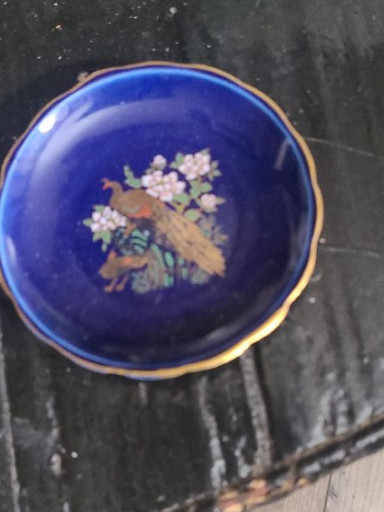
Porcelain plate with cobalt blue glaze and hand-painted pheasant decoration, likely Japanese Kutani-style

Selling Price
$25
History
This decorative plate exemplifies the Japanese tradition of cobalt blue porcelain with gilt decoration, a style that flourished during the Meiji period (1868-1912) and continued into the 20th century. Kutani ware, originating from the Ishikawa Prefecture, became renowned for its vibrant colors and nature motifs, particularly birds and flowers. The pheasant design represents prosperity and good fortune in Japanese culture, making such pieces popular exports to Western markets. Collectors of Japanese porcelain and Asian decorative arts highly prize these cobalt blue plates for their exquisite hand-painted details and rich historical significance. The combination of deep blue glaze with gold accents appeals to enthusiasts of Oriental ceramics, interior designers seeking statement pieces, and those who appreciate traditional Japanese craftsmanship. Such plates are valued both as standalone decorative items and as part of larger collections of Asian export porcelain.
Origin
Japan
Time period
Mid 20th century