
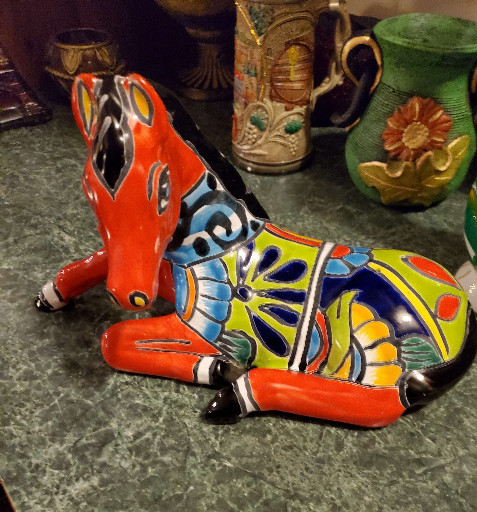
Mexican Talavera pottery horse sculpture
History
Talavera pottery originated in Puebla, Mexico, during the 16th century, blending Spanish majolica techniques with indigenous Mexican artistry. This vibrant ceramic tradition became renowned for its hand-painted floral and geometric patterns in brilliant colors, particularly blues, yellows, greens, and oranges. Animal figures like horses and donkeys became popular decorative forms in the 20th century, often serving as planters or purely ornamental pieces. Talavera horse sculptures appeal to collectors of Mexican folk art, Latin American ceramics enthusiasts, and those who appreciate colorful, handcrafted decorative objects. These pieces are valued for their cultural authenticity, artisanal craftsmanship, and the cheerful, vibrant aesthetic they bring to home décor. Collectors prize authentic Talavera pieces for their connection to centuries-old pottery traditions and the skill required to create the intricate hand-painted designs.
Origin
Puebla, Mexico
Maker
Mexican artisan (Talavera pottery tradition)
Time period
Late 20th to early 21st century