
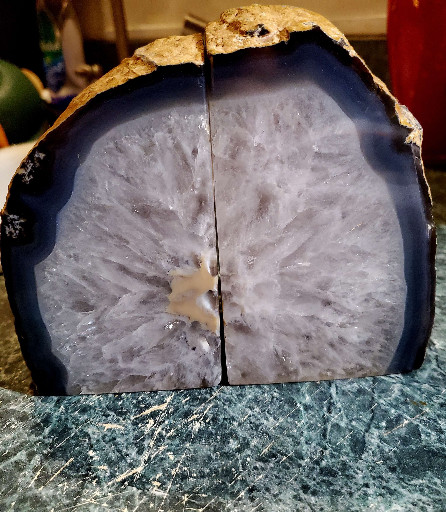
Natural agate geode bookend with crystalline druzy interior
History
Agate geodes form over millions of years when mineral-rich water seeps into volcanic rock cavities, depositing layers of silica that crystallize into beautiful banded patterns. Brazil has been the world's leading source of agate geodes since the mid-20th century, with major deposits in Rio Grande do Sul. These natural specimens became popular as decorative bookends in the 1960s-1970s when the lapidary arts experienced a renaissance, and they remain sought-after today for their unique combination of natural beauty and functional purpose. Agate bookends appeal to collectors of minerals and crystals, interior designers seeking organic decorative elements, and those interested in metaphysical properties attributed to crystals. Each piece is entirely unique, showcasing nature's artistry through distinctive banding, color variations, and sparkling druzy formations. These items bridge the gap between natural history specimens and home décor, making them popular among geology enthusiasts and design-conscious homeowners alike.
Origin
Rio Grande do Sul, Brazil
Time period
Natural formation (millions of years old), likely cut and polished in late 20th to early 21st century